Winter is the most demanding season of the year for wild birds. Cold alone is not always the biggest threat—lack of accessible food, dehydration, and human mistakes are often more dangerous than frost or snow.
Feeding birds in winter is not a simple act of kindness. Done correctly, it can help local populations survive harsh conditions. Done carelessly, it can weaken birds, spread disease, or even lead to death. This guide explains when feeding truly helps, how to do it safely, and what mistakes to avoid—based on observation, ecology, and real-world experience.
Do Birds Really Need Feeding in Winter?
Birds are naturally adapted to winter. Many species store food, change diets, or move strategically through their territory. Feeding is not always necessary.
Support becomes critical only when:
- prolonged frost freezes soil and water,
- snow covers seeds for many days,
- insects disappear completely,
- weather remains harsh for extended periods.
In mild winters or temporary cold spells, birds usually manage on their own. Feeding too early or unnecessarily can interfere with natural foraging behavior and make birds dependent on human food sources.
When Is the Right Time to Start Feeding Birds?
There is no universal calendar date. Timing depends entirely on weather conditions, not the season name.
Start feeding when:
- snow cover persists for several days,
- temperatures stay below freezing,
- natural food sources are inaccessible.
In many regions this happens between late December and January, but sudden early cold waves can require action sooner.
Important rule:
Once you start feeding during harsh conditions, you must continue consistently. Birds quickly learn feeding locations. Abruptly stopping during freezing weather can leave them without alternatives when energy reserves are already depleted.
What to Feed Birds in Winter (Safe and Effective Options)
Birds need high-energy, natural food, not human leftovers.
The best winter foods are rich in fats and calories:
- Sunflower seeds (hulled or unhulled) – suitable for many species
- Unsalted nuts (chopped) – excellent fat source
- Beef suet or plain fat balls (without nets) – ideal during freezing weather
- Grains and seeds (millet, oats, wheat) – for sparrows and ground feeders
- Fruit (apples, raisins, dried berries) – preferred by thrushes and blackbirds
All food must be:
- unsalted,
- unseasoned,
- fresh,
- free of mold.
What You Should Never Feed Birds
Many well-meaning people unknowingly harm birds with unsuitable food.
Avoid completely:
- bread and baked goods,
- salty or seasoned foods,
- sugary snacks,
- spoiled or moldy food,
- processed kitchen scraps.
Bread fills the stomach without providing real energy, leading to malnutrition. Salt damages birds’ kidneys. Mold toxins can be fatal.
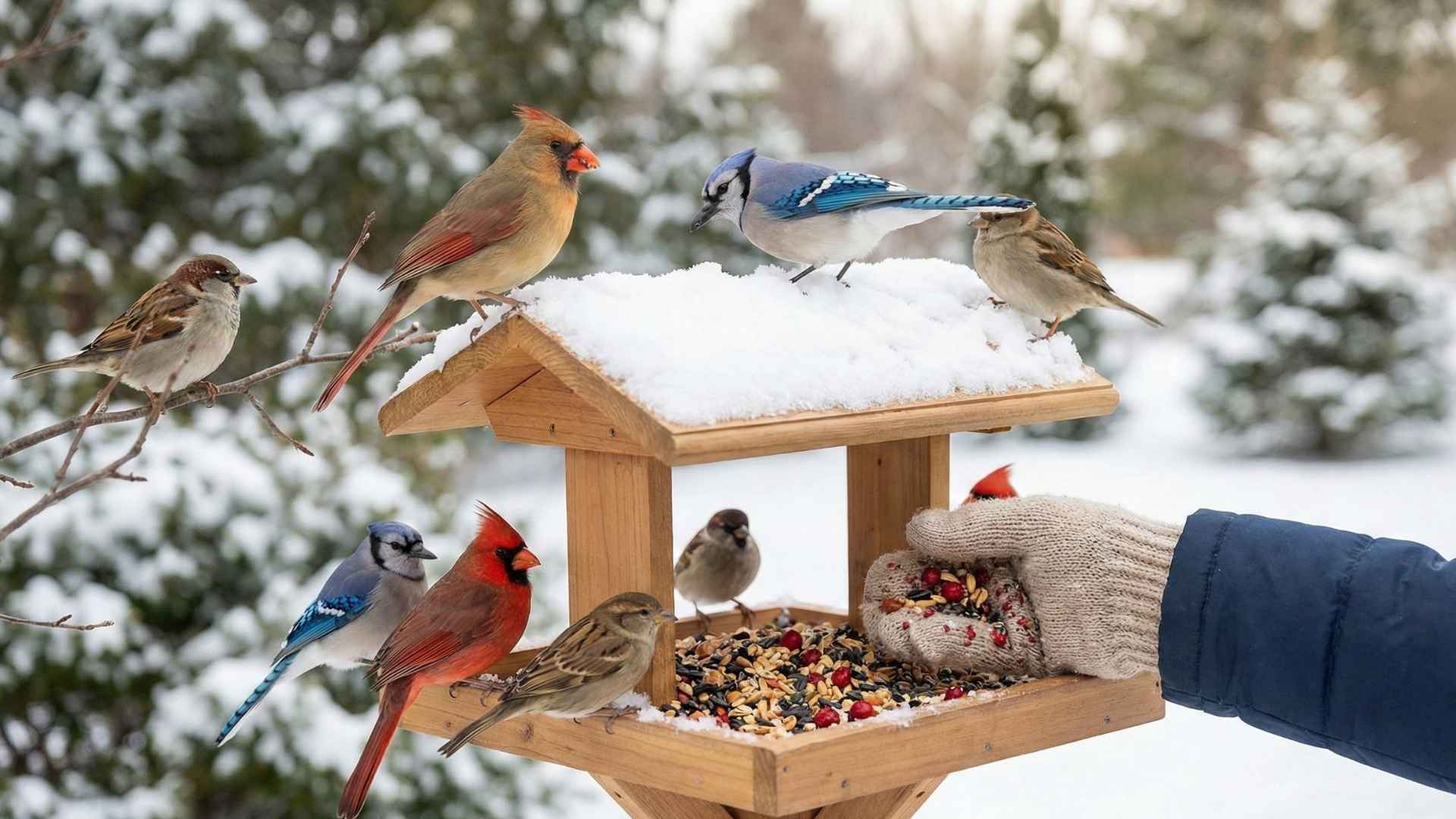
Choosing the Right Feeder and Location
A feeder is not decoration—it’s a feeding station that affects bird safety.
A good feeder should:
- protect food from rain and snow,
- prevent contamination with droppings,
- be easy to clean regularly,
- remain stable in wind.
Placement matters:
- away from dense bushes where predators hide,
- not directly in front of large windows,
- high enough to avoid cats,
- in a calm, visible area birds can monitor.
Safety always comes before aesthetics.
Feeding Birds Without a Feeder – Is It Possible?
Yes. Birds can be fed safely without traditional feeders.
Alternative options:
- food placed on clean wooden platforms,
- fruit on tree stumps,
- fat balls hung in metal holders,
- feeding trays under roofed structures.
If using fat balls, remove plastic nets. Birds can get tangled, injured, or trapped. Use dedicated holders instead.
Why Hygiene Is Critical When Feeding Birds
Feeding sites concentrate birds, which increases disease transmission risk.
Poor hygiene can spread illnesses like salmonellosis, wiping out local bird populations quickly.
Good hygiene practices:
- clean feeders regularly with hot water,
- remove uneaten food frequently,
- keep food dry,
- avoid overcrowding by using multiple feeding points.
Feeding birds responsibly means managing health risks, not just providing food.
Water: The Overlooked Lifesaver
Food is not the only winter challenge—water is often harder to find than food.
Birds need water daily for drinking and feather maintenance.
You can help by:
- placing shallow water dishes,
- refreshing water daily,
- preventing freezing when possible.
Even a small, regularly maintained water source can make a major difference during freezing periods.
Helping Birds Beyond Feeding
Supporting birds in winter goes beyond food.
Other effective actions:
- leave seed heads on perennials,
- keep berry-producing shrubs,
- allow parts of the garden to remain “wild,”
- provide dense hedges for shelter.
Natural structure offers both food and protection from wind, cold, and predators.
Feeding Birds Is a Commitment, Not a Gesture
Winter feeding is most effective when done:
- selectively,
- thoughtfully,
- consistently,
- hygienically.
Helping birds does not mean feeding at all costs. It means understanding when help is needed and how to provide it safely.
Well-managed feeding stations can save lives. Poorly managed ones can do more harm than winter itself.
FAQ – Feeding Birds in Winter
1. Should birds always be fed in winter?
No. Feeding is necessary only during prolonged harsh conditions when natural food is unavailable.
2. When should I start feeding birds?
When snow, ice, and frost persist and block access to natural food sources.
3. Can I stop feeding once I start?
Not during freezing conditions. Birds may rely on the feeding site and fail to find alternatives in time.
4. Is bread really harmful to birds?
Yes. It provides little nutrition and can lead to malnutrition and illness.
5. Are fat balls safe?
Yes, if they are plain and placed in proper holders without plastic nets.
6. Do birds need water in winter?
Absolutely. Access to unfrozen water is often more critical than food.
7. Can feeding birds spread disease?
Yes, if hygiene is poor. Regular cleaning is essential.
8. Is feeding birds on balconies acceptable?
Yes, if food is kept clean and feeders are safe and stable.
9. Should I feed birds every day?
Only during harsh weather and always consistently once feeding begins.
10. What’s the biggest feeding mistake?
Offering inappropriate food or feeding without maintaining hygiene.
Discussion (0)
No comments yet. Be the first to start the conversation!
Leave a Reply