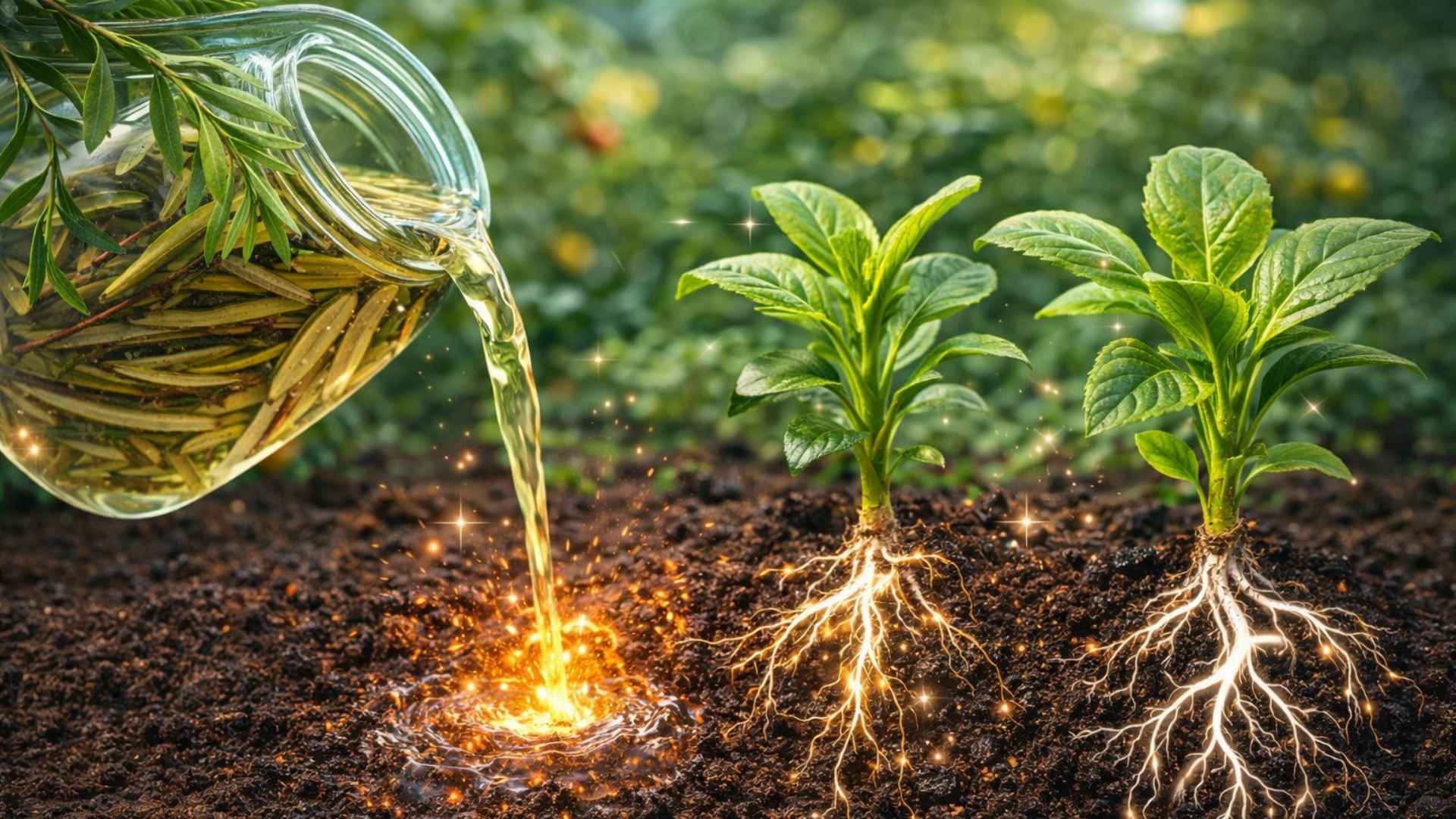


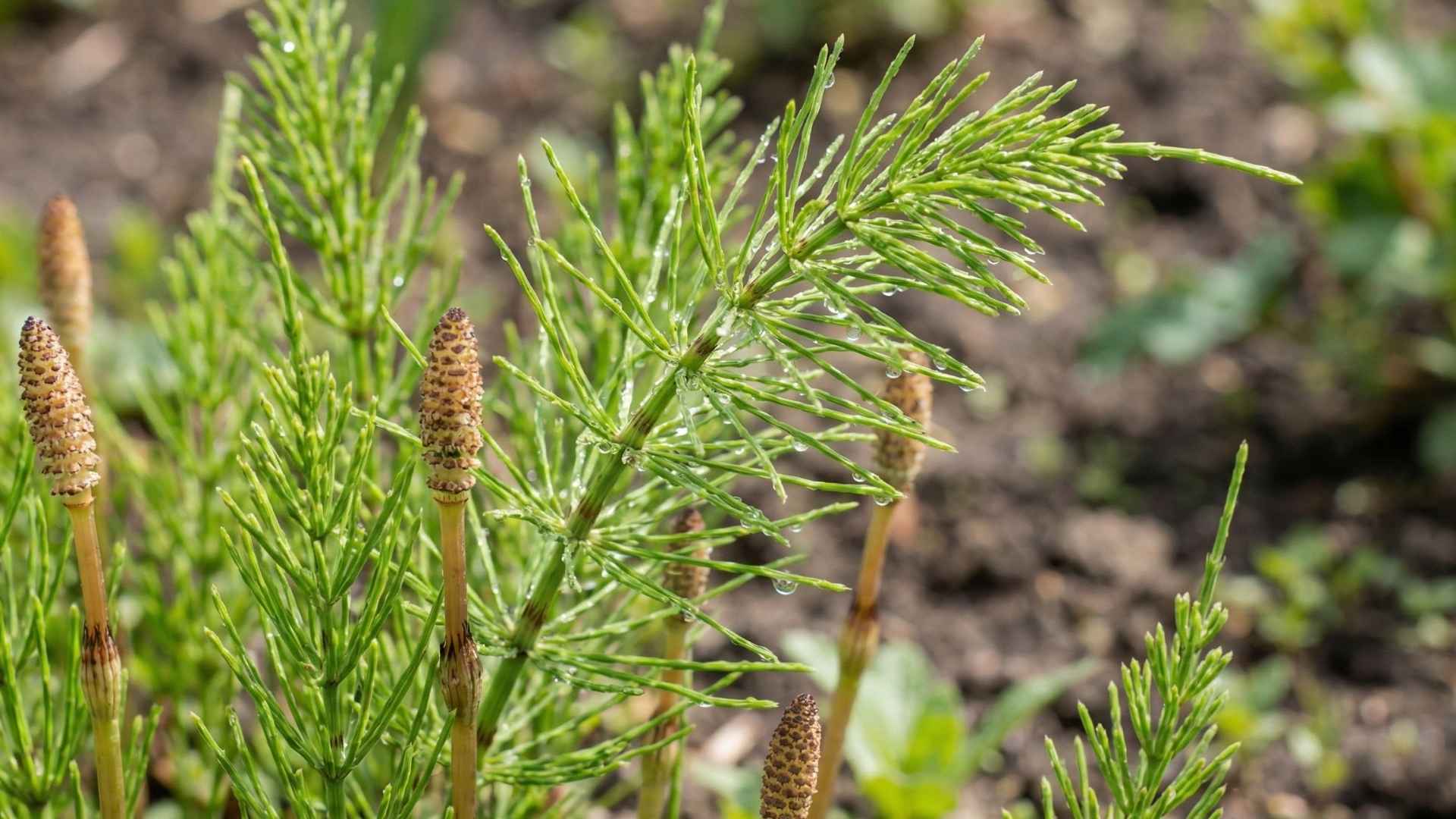
Field horsetail (Equisetum arvense) looks like a stubborn relic from another era—and that is exactly why it performs so well in the garden. It is one of the richest natural sources of plant-available silica, plus a cocktail of minerals that support stronger tissues, tighter leaf structure, and improved resilience under stress.
Gardeners often describe horsetail brews as a “natural shield” rather than a classic growth fertilizer. That framing is accurate: horsetail preparations are best used to strengthen plants and reduce the conditions in which fungal issues thrive, especially when humidity, fluctuating temperatures, or dense foliage create constant pressure.
This guide is a complete, practical compendium: how to harvest and store horsetail, three reliable preparation methods (tea, decoction, fermented extract), how to dilute and apply them, which crops respond best, what to avoid, and how to troubleshoot real-world problems.
Part 1: Why Horsetail Works (What It Really Does in the Garden)
Horsetail’s value is often reduced to “it has silica,” but its impact is broader—and more strategic.
Silica helps plants build stronger epidermal tissue. In practice, that means leaves can become less prone to micro-tears, less likely to stay wet for long periods, and more capable of handling stress from wind, sun, and heavy watering. It does not create an impenetrable armor, but it can make tissues more robust—especially when applied consistently as a preventative routine. Many gardeners notice that plants treated with horsetail sprays keep their leaves firmer, thicker, and less “floppy,” which improves airflow and reduces stagnation.
Horsetail preparations also act as a support tool for plant hygiene. Sprayed as a fine mist, it can help leaves dry faster and discourage the “perfect storm” that fungal spores look for: wet leaf surfaces, dense canopies, and mild temperatures. Importantly, horsetail is most useful when you treat it like a system: pruning for airflow, watering at soil level, spacing plants properly, and then using horsetail as an additional layer—rather than expecting it to solve everything alone.
Finally, horsetail can be a gentle mineral supplement. It is not a nitrogen bomb. That makes it especially valuable mid-season and late-season, when you want strength and stability without pushing excessive, soft new growth.
Part 2: Identifying and Harvesting Field Horsetail (Safety First)
Not every horsetail is the right horsetail. For garden use, people typically rely on field horsetail (Equisetum arvense). It has thin, jointed stems and a brush-like, whorled appearance. If you are uncertain, harvest only from areas you know well and avoid lookalikes—especially if you plan to use the preparation widely across your garden.
Harvest at the right time for best potency. The most useful stems are collected when the plant is fully developed and green (late spring through summer in many climates). Choose clean locations: never harvest from roadsides, industrial edges, or places treated with herbicides. Horsetail loves poor, compacted soils and ditches, which are often contaminated—so be selective.
You can use horsetail fresh or dried, and drying is often the smarter option. Dried horsetail stores well and gives more consistent results across the season. To dry: spread stems in a thin layer in a shady, airy place until brittle, then store in paper bags or airtight containers away from light and moisture.
Part 3: The Three Best Preparations (Tea, Decoction, Fermented Extract)
There is no single “correct” horsetail fertilizer—there are three main preparations, and each has a different purpose. Choosing the right one is the difference between “it worked” and “nothing happened.”
Option A — Horsetail Tea (Quick, Mild, Versatile)
Horsetail tea is a short steep (like a strong herbal infusion). It is the easiest method and works well as a gentle foliar support spray and light soil drench. Tea is ideal when you want a simple routine you can repeat often, and when you are using horsetail primarily as a preventative measure.
Tea is also the best entry point if you are new to horsetail, because it is forgiving: lower risk of over-strength mixtures, fewer odor issues, and faster turnaround. The tradeoff is that tea is less concentrated than a decoction or fermented extract, so it requires regular use.
Option B — Horsetail Decoction (Strongest for Foliar “Shield” Use)
A decoction is the classic “boiled extraction” method. Silica and certain minerals are more effectively pulled into water with heat, so decoction is widely used as a stronger foliar spray in high-pressure periods: humid weeks, greenhouse conditions, long rain spells, or when plants are entering dense growth.
This is the method most gardeners mean when they talk about horsetail spray “for mildew pressure,” but keep expectations realistic: it is not a miracle cure. It performs best as a consistent preventative and as a support routine during risky weather.
Option C — Fermented Horsetail Extract (Longest-Lasting, Smelliest, Often Overused)
Fermentation creates a more complex brew that can be used as a soil drench (diluted) and sometimes as a foliar, but it comes with two cautions: the smell and the tendency to over-concentrate. Many gardeners make fermented extracts too strong and then blame horsetail when leaves spot or roots stress.
If you choose fermentation, treat it like a concentrated product: strain carefully, store correctly, and dilute more than you think you need at first. When used properly, it can be a useful mineral support—especially for long-season gardens where you prefer to batch-produce inputs.
Part 4: Step-by-Step Recipes (Exact Quantities, Timing, and Equipment)
Equipment (for all methods):
Plastic or food-safe bucket, pot (for decoction), gloves, strainer, stick/spoon for mixing, clean water, storage bottles.
Recipe 1 — Horsetail Tea (Fast Method)
Time required: 12–24 hours (including cooling)
Best for: routine foliar spray, gentle soil support
Ingredients:
- Fresh horsetail: 1 kg per 10 L water
OR dried horsetail: 150–200 g per 10 L water - Water: preferably rainwater or dechlorinated water
Steps:
- Chop horsetail into smaller pieces for better extraction.
- Pour hot (not boiling) water over the plant material.
- Cover and steep 12–24 hours.
- Strain thoroughly.
- Use immediately or store chilled/covered for a short period.

Recipe 2 — Horsetail Decoction (Boiled Extraction)
Time required: 1–2 hours total
Best for: strong preventative foliar spray during fungal pressure
Ingredients:
- Fresh horsetail: 1 kg per 10 L water
OR dried horsetail: 150–200 g per 10 L water
Steps:
- Soak the horsetail in water for 12 hours (optional but improves extraction).
- Bring to a gentle simmer.
- Simmer 20–30 minutes (do not aggressively boil).
- Cool fully, then strain.
- Store in sealed containers in a cool, dark place.

Recipe 3 — Fermented Horsetail Extract (Bucket Method)
Time required: 10–21 days
Best for: batch production, mineral soil drench (diluted)
Ingredients:
- Fresh horsetail: bucket filled ½ to ¾ with chopped stems
- Water to cover completely
Steps:
- Fill a plastic bucket with chopped horsetail.
- Add water until fully submerged.
- Cover loosely (never airtight). Gases must escape.
- Stir every 2–3 days.
- Fermentation is complete when bubbling slows and liquid darkens.
- Strain and store in sealed containers.
Odor control tip: add a small handful of rock dust or biochar to reduce smell and stabilize the brew.

Part 5: Dilution and Application (This Is Where Most People Get It Wrong)
Horsetail preparations are effective because they are consistent—not because they are “extra strong.” Over-application can cause leaf spotting, stress, or simply waste time.
Recommended dilutions by method
- Tea (foliar): 1:5 to 1:10
- Decoction (foliar): 1:5 to 1:10 (start at 1:10 for sensitive plants)
- Fermented extract (soil drench): 1:10 to 1:20
- Fermented extract (foliar): 1:20 (only if well strained and mild)
Application rules that prevent failure
- Spray in the evening or early morning to avoid sun stress.
- Aim for a fine mist that coats leaves lightly—do not drench.
- Reapply after heavy rain (it rinses off).
- Treat it as a routine: every 7–14 days during pressure periods.
- Combine with good airflow, correct watering, and sensible feeding.
Part 6: Best Plants and Best Timing (Where Horsetail Gives the Highest ROI)
Horsetail is most valuable on crops that suffer when leaves stay wet, or when foliage density makes airflow difficult.
It shines in greenhouses, polytunnels, and compact gardens where humidity builds quickly. It also supports plants that are prone to stress cracks, soft growth, and mid-season “tissue collapse” from irregular watering.
Use it most intensively:
- in early-to-mid season as leaf mass builds,
- during long humid spells,
- after pruning sessions (when plants are rebalancing),
- during periods of fluctuating night/day temperatures.
Part 7: Plant Compatibility Table (Who Loves It, Who Needs Caution)
| Plant Group | Suitability | Best Use | Notes |
|---|---|---|---|
| Tomatoes & Peppers | ⭐⭐⭐⭐⭐ | Decoction spray | Especially valuable in greenhouses; supports leaf strength and hygiene. |
| Cucumbers, Zucchini, Squash | ⭐⭐⭐⭐ | Tea or decoction | Use early; keep foliage dry; repeat after rain. |
| Grapes & Berry Bushes | ⭐⭐⭐⭐ | Decoction spray | Apply in spring/early summer; avoid spraying during peak sun. |
| Roses & Ornamentals | ⭐⭐⭐⭐⭐ | Decoction spray | Excellent as a seasonal routine for sturdier foliage. |
| Leafy Greens | ⭐⭐⭐ | Mild tea | Use gentle dilutions; avoid frequent heavy sprays. |
| Seedlings | ⚠ Caution | Very mild tea | Only if needed; start at 1:15 to 1:20 and test first. |
Part 8: Practical Programs (Simple Routines That Actually Work)
Program A — Greenhouse Tomatoes (Humidity Pressure Routine)
- Week 1–2 after planting: tea 1:10 foliar every 10–14 days
- As canopy thickens: decoction 1:10 weekly
- After pruning: decoction 1:10 within 24–48 hours (evening)
Program B — Cucumbers and Zucchini in Wet Weather
- Start early: tea 1:10 every 7–10 days
- After rain: repeat when leaves dry
- Keep watering strictly at soil level
Program C — Roses and Ornamentals
- Spring start: decoction 1:10 every 10–14 days
- Mid-season: reduce frequency if weather is dry and airy
- Resume during humid stretches
Part 9: Storage, Shelf Life, and Quality Checks
- Tea is best used fresh; store only briefly (short-term, cool, covered).
- Decoction can be stored longer in sealed containers in a cool, dark place.
- Fermented extract stores 6–12 months if strained well and sealed.
Quality signs:
- Normal: herbal smell (tea/decoction), stronger smell (fermented)
- Problem: mold mats, rancid “rotten” odor combined with slimy surface scum and no fermentation activity (often due to contamination or poor stirring)
Part 10: Common Mistakes That Make Horsetail “Not Work”
- Using the wrong plant or questionable harvest source
- Spraying only once, then expecting results
- Overconcentrating the brew and stressing leaves
- Spraying in direct sun
- Ignoring airflow and watering habits
- Treating horsetail like a cure instead of a preventative routine
Part 11: Extensive FAQ (15 Questions, Deep Troubleshooting)
1. Is horsetail fertilizer the same as horsetail spray for mildew pressure?
Not exactly. Horsetail is best seen as a strengthening and hygiene-support tool. A decoction is typically used as a foliar “shield” routine, while fermented extract is more often a soil drench for mineral support. Many gardeners use the word “fertilizer,” but the main benefit is resilience rather than rapid growth.
2. Which method is best: tea, decoction, or fermentation?
For most gardens, decoction is the most reliable foliar option during humid periods. Tea is excellent for routine maintenance and beginners. Fermented extract is useful if you want batch production, but it requires careful dilution and straining.
3. Can I apply horsetail undiluted?
You should not. Even if it “seems fine” once, undiluted sprays can cause spotting, stress, or uneven leaf response. Dilution also improves coverage and reduces waste.
4. How often should I spray horsetail on tomatoes?
During humid or high-pressure conditions: every 7–10 days. In dry, airy weather: every 10–14 days. Always reapply after heavy rain if the foliage was washed clean.
5. Can I spray during flowering?
Yes, but spray lightly and in the evening. Avoid soaking open blooms. Focus on leaves, stems, and canopy structure rather than drenching flowers.
6. My leaves got spots after spraying—what happened?
Most often it is one of three causes: (1) mixture too strong, (2) sprayed in sun or heat, (3) poor straining, leaving fine plant particles that cling to leaves. Flush with clean water if needed, and resume with a weaker dilution.
7. Does horsetail replace compost or balanced feeding?
No. Horsetail supports strength and resilience, but it does not provide the broad nutrition that compost, well-made organic fertilizers, or targeted feeding programs provide. Think of horsetail as a strategic supplement, not the foundation.
8. Can I use horsetail on indoor plants?
Technically yes, using mild tea (1:15 to 1:20), but foliar spraying indoors can create humidity and leaf wetness in stagnant air. If you use it indoors, prioritize soil drench and ensure airflow.
9. Can I combine horsetail with nettle or comfrey fertilizers?
Yes, but keep the logic clear: nettle supports leafy growth (nitrogen), comfrey supports fruiting/flowering (potassium), and horsetail supports tissue strength and hygiene. Use them on different days or as separate applications to avoid overcomplicating mixes.
10. What is the safest dilution for sensitive plants and seedlings?
Start with very mild tea at 1:15 to 1:20. Apply once, then observe for 48 hours. If there is no spotting or stress, you can slowly increase strength.
11. Can I use dried horsetail instead of fresh?
Yes, and many gardeners prefer dried because it stores well and gives consistent results. A practical baseline is 150–200 g dried horsetail per 10 L water, adjusted by plant sensitivity.
12. My fermented horsetail smells unbearable—can I reduce odor?
Yes. Use a loose cover (not airtight), stir regularly, and add a small amount of rock dust or biochar. Odor tends to spike early, then stabilize as fermentation completes.
13. Does horsetail change soil pH?
Used correctly and diluted, it generally does not create dramatic pH shifts. The more important factor is your overall soil management: compost use, mulching, irrigation water, and long-term amendments.
14. When should I stop using horsetail in the season?
You can continue into late season if disease pressure remains, especially in greenhouses. However, avoid heavy, frequent sprays when temperatures drop and leaves stay wet for long periods—timing and leaf-dryness become more important than “more product.”
15. Is horsetail safe for pets and beneficial insects?
When diluted and applied responsibly, it is generally considered low-risk. Avoid leaving concentrated buckets accessible to pets (taste and stomach upset), and avoid spraying directly onto active pollinators—spray in the evening when they are not foraging.
Discussion (0)
No comments yet. Be the first to start the conversation!
Leave a Reply